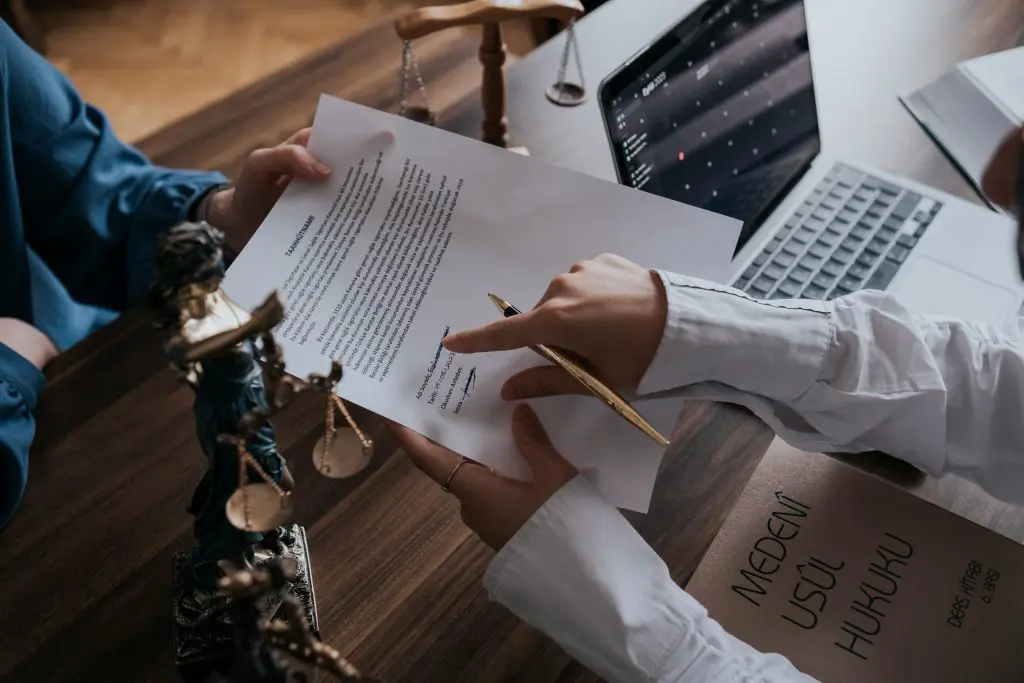
No. If you and your spouse agree on everything, you generally do not have to hire a divorce lawyer in New Mexico. You may represent yourselves in an uncontested divorce. However, you must still properly resolve and document issues such as property, debt, support, and—if you have children—custody, parenting time, and child support. (Self Representation Resource Center)
That distinction is important. Agreement can make a divorce less adversarial and potentially more straightforward, but it does not eliminate the legal consequences of what you agree to.
A couple may sincerely say, “We agree on everything,” while still having unanswered questions about a house, retirement account, debt, parenting schedule, or financial obligation. The goal is not merely to avoid conflict. It is to make sure the agreement actually addresses the issues necessary to complete the divorce and that each spouse understands what the agreement means after the case is finished.
The Law Office of Anthony Griego LLC handles both contested and uncontested divorce matters as part of its Albuquerque family-law practice, along with child custody, child support, parenting plans, spousal support, property division, and retirement division.
What Is an Uncontested Divorce in New Mexico?
An uncontested divorce generally means the spouses have reached agreement about the issues that must be resolved to end the marriage.
In New Mexico, spouses are permitted to represent themselves, and the state provides official divorce forms for cases with and without children. (New Mexico Courts)
However, an uncontested divorce is still a legal proceeding.
The spouses must complete the appropriate paperwork, disclose and address property and debts, deal with child-related issues when applicable, and submit the required documents to the court. The divorce is not final simply because both spouses agree. It becomes final when the judge signs the Final Decree of Dissolution of Marriage. (Second Judicial District)
What Does “We Agree on Everything” Actually Mean?
This is usually the most important question.
Saying that you agree to get divorced is not the same thing as agreeing on all of the terms of the divorce.
For an uncontested case to remain truly cooperative, the spouses may need to reach clear agreements concerning several different subjects.
Do You Agree About Property?
Property can include much more than furniture and personal belongings.
Depending on the marriage, you may need to address:
- Bank accounts
- Vehicles
- Real estate
- Investments
- Valuable personal property
- Business interests
- Retirement benefits
- Other assets
New Mexico’s self-representation guidance specifically requires spouses to identify property in the Marital Settlement Agreement, including who will receive it and its value. This requirement applies even when the spouses have already divided the property between themselves. (Self Representation Resource Center)
So a verbal agreement such as “you keep your things and I’ll keep mine” may not be enough to complete the legal process.
Do You Agree About Your Home?
A house can create several separate issues.
For example:
Who will keep the property?
Will the house be sold?
How will equity be divided?
Who will be responsible for the mortgage?
Will the spouse keeping the house after the divorce refinance it?
What happens if refinancing is not possible?
A couple may completely agree that one spouse should remain in the home and still need to think carefully about the legal and financial consequences of that decision.
Being removed from the title to a house, for example, is not necessarily the same thing as being released from an obligation to a mortgage lender.
That is the type of distinction spouses should understand before signing their final agreement.
Do You Agree About Debt?
Debt also has to be addressed.
The New Mexico Courts’ divorce guidance states that spouses must identify their debts in the Marital Settlement Agreement, indicate which spouse will pay each debt, and state the amount owed. (Self Representation Resource Center)
Potential obligations can include:
- Mortgages
- Credit cards
- Vehicle loans
- Personal loans
- Medical debt
- Tax obligations
- Business debt
- Other joint financial obligations
“We’ll each pay our own debts” may sound straightforward, but the spouses should know exactly which debts are involved and whether outside creditors can still look to one or both spouses under existing contracts.
Do You Agree About Retirement Accounts?
Retirement benefits are easy to overlook because they may not feel like money the couple currently uses.
But retirement accounts can be important marital assets.
The Law Office of Anthony Griego LLC specifically includes retirement division as part of its family-law practice.
Spouses should understand:
- what retirement accounts exist;
- whether any portion may be subject to division;
- whether each person intends to retain his or her own account;
- what rights may be waived by the agreement;
- and whether additional documentation is required to implement an agreed division.
A statement such as “we agreed not to touch each other’s retirement” may be a genuine agreement, but both spouses should understand what they are retaining and what they may be giving up.
Do You Agree About Spousal Support?
Another question is whether either spouse will request spousal support, commonly called alimony.
A cooperative couple may agree:
- no spousal support will be paid;
- one spouse will pay support;
- the amount of support;
- how long it will continue;
- or another arrangement appropriate to their circumstances.
Again, agreement itself is valuable. But both parties should understand the consequences of the agreement before it is incorporated into a final divorce decree.
Do You Agree About Child Custody?
When minor children are involved, agreeing to divorce is only part of the process.
Parents may need to address custody and decision-making responsibilities.
The firm’s family-law practice includes child custody and parenting plans in addition to divorce representation.
A statement such as “we’ll share custody” may not answer practical questions such as:
Who makes important decisions?
How will the parents communicate about school, medical care, and activities?
Where will the children primarily live?
How will disagreements be addressed?
The details matter because the parenting arrangement may govern family life long after the divorce itself is complete.
Do You Agree About Parenting Time?
Parents should also have a workable parenting-time schedule.
That can include:
- Regular weekdays
- Weekends
- Holidays
- Birthdays
- School breaks
- Summer schedules
- Transportation
- Exchange locations
- Travel
- Communication with the children
“We’ll work it out as we go” may work for some families, but a clear parenting plan can reduce uncertainty when schedules or circumstances change.
Do You Agree About Child Support?
Child support is another area where agreement does not necessarily eliminate formal requirements.
New Mexico’s Second Judicial District explains that once the time-sharing arrangement is known, child support can be determined under the New Mexico Child Support Guidelines. It also states that the Child Support Worksheet must be attached to the final documents submitted to the judge for approval. (Second Judicial District)
So even when both parents are cooperative, the child-support component should be handled carefully and documented appropriately.
If We Agree on Everything, Why Do We Still Need a Marital Settlement Agreement?
Because New Mexico requires the spouses’ agreement to be formally documented.
New Mexico’s domestic-relations instructions state that a Marital Settlement Agreement, Form 4A-301, must be completed, signed by both parties, and filed with the court in every dissolution-of-marriage case. (Self Representation Resource Center)
That agreement addresses important financial and property matters.
The state also specifically instructs spouses to disclose and allocate property and debts, even when those items have already been informally divided. (Self Representation Resource Center)
This is why an uncontested divorce is not simply a matter of both spouses telling the judge:
“We agree.”
The agreement must be translated into the appropriate legal documents.
Do Both Spouses Need Their Own Lawyers?
Not necessarily.
New Mexico permits self-representation, so neither spouse is automatically required to hire an attorney simply because they are divorcing. (Self Representation Resource Center)
Some couples may choose to handle an uncontested divorce themselves.
Another possibility is that one spouse obtains legal advice concerning his or her own interests.
What is important to understand is that one attorney does not automatically represent both spouses simply because the divorce is cooperative.
An attorney has professional obligations to the client he or she represents.
That distinction matters if one spouse asks an attorney to prepare or review documents. The other spouse should not assume that the attorney is also providing legal advice to him or her.
Should I Have an Attorney Review an Uncontested Divorce Agreement?
It may be useful.
An attorney review does not necessarily mean turning an uncontested case into a contested one.
In fact, one reason spouses pursue an uncontested divorce is often that they want to reduce unnecessary conflict.
A legal review can instead focus on questions such as:
- Does the agreement clearly identify the property?
- Are all significant debts addressed?
- Is the treatment of the home workable?
- Are retirement assets accounted for?
- Is spousal support addressed?
- Are custody and parenting terms clear?
- Has child support been properly handled?
- Does the person understand what rights or obligations the agreement creates?
The Law Office of Anthony Griego LLC’s services include legal consultations, case evaluations, settlement negotiations, document drafting, mediation participation, and court representation.
That means legal assistance can be tailored to the actual complexity of the matter rather than assuming every divorce requires a courtroom battle.
What If We Trust Each Other?
Trust can make the process considerably easier, but trust is not a substitute for complete information.
Both spouses should still know what assets and debts exist.
For example, before agreeing to a division, it may be useful to identify:
- Checking and savings accounts
- Credit cards
- Retirement plans
- Investment accounts
- Real estate
- Loans
- Vehicles
- Business interests
- Other significant property or obligations
The point is not to create suspicion where none exists.
It is to make sure that when both spouses say, “We agree,” they are agreeing based on a reasonably complete understanding of the marital financial picture.
What If We Agree to Split Everything 50/50?
That sounds simple, but it can mean different things.
Does 50/50 mean every asset is divided in half?
Does one spouse receive the house while the other receives retirement assets of similar value?
How are debts handled?
How is equity measured?
Are taxes or transaction costs relevant?
Are certain assets separate rather than marital?
Those questions illustrate why a percentage alone may not fully describe a settlement.
A clear Marital Settlement Agreement should identify what each person will actually receive and what each person will actually be responsible for.
What If We Agree That One of Us Keeps the House?
This is a particularly important situation for attorney review.
The spouses should consider more than possession of the property.
A workable agreement may need to address:
Title: Who owns the property after divorce?
Mortgage: Who remains legally responsible to the lender?
Equity: Does one spouse owe the other a share?
Refinancing: Is refinancing required, and by when?
Sale: What happens if refinancing does not occur?
Expenses: Who pays taxes, insurance, repairs, or other costs?
Two spouses can agree completely about the goal while overlooking practical details needed to make that goal work.
Can an Uncontested Divorce Become Contested?
Yes.
A divorce may begin cooperatively and later develop disagreements.
For example, spouses might agree about ending the marriage but then discover differences concerning:
- House equity
- Parenting time
- Child support
- Retirement
- Debt
- Spousal support
- A business
- Another asset
When that happens, the case may require negotiation, mediation, motions, hearings, discovery, or other court procedures.
The firm’s typical client process can include legal strategy development, evidence gathering, document filing, negotiation or mediation, court hearings, and trial preparation when necessary.
That does not mean every disagreement leads to trial. Many disputes may still be resolved through negotiation or mediation.
What Happens If We Stop Agreeing Before Our Divorce Is Final?
The case does not automatically end.
Instead, the spouses may need to resolve the remaining disputed issues before the divorce can be completed.
This is where a case can shift from a straightforward uncontested process toward a more traditional contested divorce.
If a disagreement develops, speaking with a New Mexico divorce attorney can help you understand:
- what issues remain unresolved;
- what your legal options are;
- whether negotiation may solve the dispute;
- whether mediation is appropriate;
- or whether court involvement may be necessary.
Does a Judge Still Have to Approve an Uncontested Divorce?
Yes.
The fact that the spouses agree does not itself terminate the marriage.
New Mexico’s Second Judicial District states that a divorce is not final until the judge signs the Final Decree of Dissolution of Marriage. (Second Judicial District)
That is another reason proper documentation matters.
An uncontested divorce may reduce disputes between the parties, but the required documents still have to be completed and submitted through the court process.
Agreement vs. Legal Understanding
| What Spouses May Say | What Still Deserves Attention |
| “I’ll keep the house.” | Mortgage responsibility, title, equity, refinancing |
| “We’ll split everything 50/50.” | Exact assets, values, and debts |
| “We’ll share the kids equally.” | Custody, schedule, holidays, decisions |
| “Neither of us wants alimony.” | Whether both understand the effect of that decision |
| “We’ll leave retirement alone.” | What each spouse may be retaining or waiving |
| “We trust each other.” | Whether property and debts have been fully identified |
The key distinction is simple:
Agreement answers “Are we fighting about this?”
Legal understanding answers “Do we know what this agreement actually does?”
Both matter.
Frequently Asked Questions About Uncontested Divorce in New Mexico
Do I Need a Lawyer for an Uncontested Divorce in New Mexico?
No. New Mexico allows self-represented litigants to complete divorce proceedings, including uncontested cases. Official domestic-relations forms are available for people with and without attorneys. (New Mexico Courts)
Can We Get Divorced Without Lawyers If We Agree on Everything?
Potentially, yes. But the spouses must still complete the required legal documents, address property and debt, and handle custody, parenting, and support requirements when children are involved.
What Makes a Divorce Uncontested?
Generally, the spouses have reached agreement about the issues necessary to resolve the divorce rather than asking the court to decide disputed matters.
Do We Still Need a Marital Settlement Agreement If We Agree?
Yes. New Mexico’s domestic-relations instructions state that a Marital Settlement Agreement must be completed, signed by both spouses, and filed with the court in every dissolution-of-marriage case. (Self Representation Resource Center)
Can We Write Our Own Divorce Agreement?
Self-represented spouses may use New Mexico’s approved forms and resources. The state’s Guide & File program can also help pro-se litigants prepare certain court documents. (New Mexico Courts) Whether a proposed agreement adequately protects a particular person’s legal interests is an individualized legal question.
Can One Lawyer Represent Both Spouses?
Do not assume that one attorney represents both parties simply because the divorce is uncontested. An attorney represents the client with whom the attorney-client relationship exists. Each spouse should understand whose interests the attorney represents.
Do We Need Lawyers If We Agree on Child Custody?
Not automatically. But the custody and parenting arrangement still needs to be properly documented, and parents should understand how the agreement will function in practice.
Do We Need Lawyers If We Agree on Child Support?
Not necessarily. However, New Mexico child-support guidelines and worksheets may still apply. In the Second Judicial District, the Child Support Worksheet is required with final documents when child support is involved. (Second Judicial District)
Can an Uncontested Divorce Become Contested Later?
Yes. If the spouses stop agreeing about one or more important issues before the case is finalized, those issues may need to be resolved through negotiation, mediation, or court proceedings.
Is an Attorney Review Worth Considering if We Already Agree?
It can be. Review may help one spouse understand the meaning of a proposed settlement, particularly when the divorce includes real estate, retirement accounts, significant debt, children, support, or other long-term obligations.
You Agree on the Divorce Terms—Make Sure You Understand What You’re Signing
An uncontested divorce can offer an important advantage: the spouses, rather than a judge, may be able to resolve many important issues through agreement.
But agreement does not eliminate legal consequences.
The Marital Settlement Agreement and other final divorce documents can affect property, debt, housing, retirement, parenting, child support, spousal support, and future financial obligations.
The Law Office of Anthony Griego LLC provides family-law representation to clients throughout Albuquerque and Central New Mexico. The firm emphasizes personalized representation, direct attorney communication, careful preparation, and practical legal advice.
Anthony Griego is a former Assistant District Attorney with extensive courtroom and family-law experience. The firm’s editorial and client-service approach emphasizes clear explanations, realistic guidance, preparation, and helping clients make informed decisions rather than creating unnecessary conflict.
If you and your spouse agree on the divorce terms but you want to understand what those terms mean before the divorce becomes final, consider speaking with an experienced Albuquerque divorce attorney.
Call The Law Office of Anthony Griego LLC at (505) 508-3110 to schedule a confidential consultation.
When this article is published, it should link contextually to the firm’s Uncontested Divorce, Divorce Lawyer Albuquerque, Family Law, Child Custody, Child Support, and Parenting Plans resources, as well as the companion articles “Do I Need a Lawyer to File for Divorce in New Mexico?” and “Can You Get a Divorce Without a Lawyer in New Mexico?” This follows the firm’s internal-linking architecture for building a connected divorce topical cluster rather than isolated articles.
Legal Disclaimer
This article is provided for general informational and educational purposes only and is not legal advice. The information may not apply to your individual circumstances. Reading this article or contacting The Law Office of Anthony Griego LLC does not, by itself, create an attorney-client relationship. Laws, court rules, forms, and procedures may change. Consult a qualified New Mexico attorney regarding your specific circumstances.
Sources & References
This article was prepared using publicly available information and resources from the New Mexico Courts, including:
- New Mexico Courts — Divorce & Family Forms & Files
- New Mexico Courts — Divorce Self-Representation Resources
- New Mexico Courts — Guide & File Court Documents
- First Judicial District Court — Self-Representation and Guide & File Resources
- Second Judicial District Court — Divorce and Family Law Self-Representation Resources
These external resources are provided for informational purposes. Court forms, procedures, rules, and online resources may change; readers should consult the applicable court or a qualified New Mexico attorney for current information.